
Platform
Who's it for?
Resources
Compare


Here's a pattern that shows up in a lot of Amazon reports. Ad spend on a top product goes up, clicks and sessions go up with it, and revenue on that product stays flat.
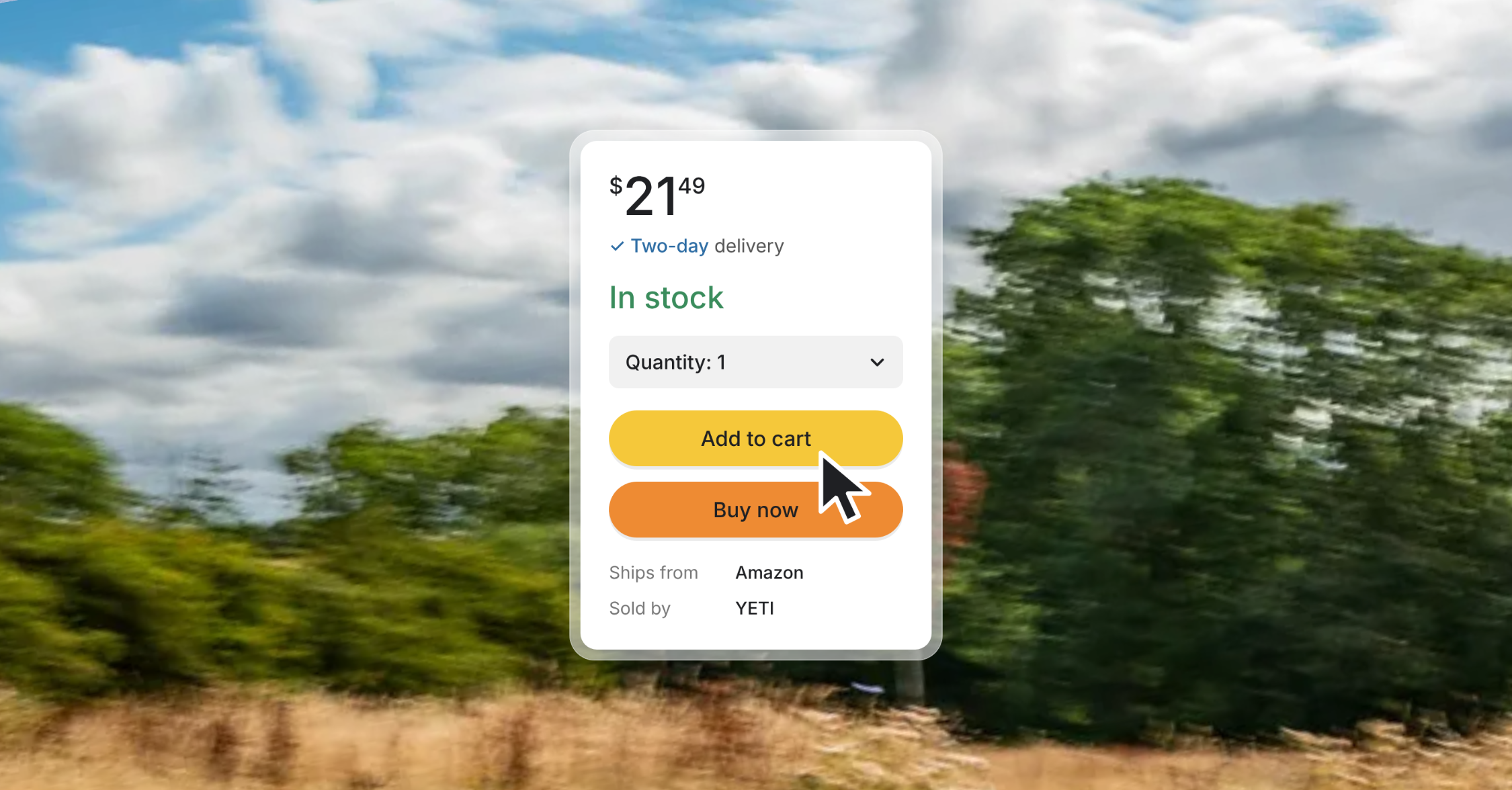
Usually nothing is wrong with the listing or the ads. The issue is who's in the Buy Box. For part of the week an unauthorized seller was holding it, so the shoppers your ads brought in bought from them instead of you.
That's the core problem with unauthorized sellers on Amazon: you pay to bring shoppers to the page, and someone else gets the sale. Most brands don't know how often it happens, so they don't know what it's costing them.
According to Amazon, over 80% of sales on listings with more than one seller go through the Buy Box, and the share is higher on mobile, where the link to other sellers is harder to find. So when an unauthorized seller has the Buy Box, very few shoppers ever see your offer.
Getting it back takes time. You have to figure out who the seller is, collect evidence, and get the violation dealt with, either through Amazon or directly with the seller. That usually takes days.
Many brands also don't notice when they lose it. Amazon doesn't send an alert when the Buy Box changes hands, and unauthorized sellers often use storefront names that don't connect back to any reseller you know.
So the problem tends to be bigger, last longer, and get noticed later than most teams expect. Before you can enforce anything, you need to be able to see it.
Most teams only count the lost sale, but there are at least four other costs, and some of them are larger.
The shopper on your listing probably got there through your Sponsored Products ads, your brand campaigns, or your email and social. If an unauthorized seller holds the Buy Box when they arrive, you paid to acquire that customer and the seller got the order. A seller holding the Buy Box 40% of the time means roughly 40% of the ad spend on that listing is driving sales for them.
Unauthorized sellers usually win the Buy Box by pricing below MAP. Once shoppers see the product at that lower price, it becomes what they expect to pay, on Amazon and on your own site and your retailers' sites too. A listing can be fixed quickly, but changing what customers think a product should cost takes much longer.
This one matters most for brands with a wholesale business. When unauthorized sellers undercut the market, your authorized resellers can't sell the line at a profit. Some will ask for better wholesale pricing, and some will stop carrying it. The damage goes past one listing, because it makes your brand less attractive to the partners you chose.
Unauthorized offers are often where gray-market or counterfeit units show up, and when a shopper gets a bad product, they usually blame the brand. In one survey of US consumers, 52% said they had lost trust in a brand after buying a fake online (Retail Dive). A UK version of the same survey found that 34% were also less likely to buy that product from the brand's own website (Licensing Source).
Price cuts the other way too. Unauthorized sellers don't always undercut you. When stock runs low, some list your product well above its normal price, and the shopper who pays it feels ripped off by your brand, not by a seller they've never heard of. It's one reason a lot of shoppers now check the brand's own site or another retailer before buying on Amazon, just to make sure the price is right.
Without a system in place, someone on your team ends up searching for seller IDs, filing reports, and ordering test buys to prove a product is gray-market. That time comes out of pricing and channel work, and the job doesn't end, because new sellers keep appearing.
You can estimate the first cost fairly quickly with three numbers: how many of your ASINs have unauthorized offers, how much revenue those ASINs bring in, and how often an unauthorized seller holds the Buy Box.
Revenue at risk = Flagged ASINs × Avg. revenue per ASIN × % of time an unauthorized seller holds the Buy Box
Here's an example for a mid-size brand:
This only covers revenue lost to unauthorized sellers. It leaves out the ad spend, the price erosion, the effect on your resellers, and your team's time, so the real number is higher.
The first two numbers are easy to pull. The third is harder, because most brands don't track how often they lose the Buy Box. Amazon doesn't report it, and nobody on the team is checking every day.
You can't take action against sellers you don't know about, so start with visibility:
ShopVision's Pricing Intelligence and Wholesale & MAP Intelligence work together on exactly this. They show you who's selling your products, at what price, and who has the Buy Box, on Amazon and across the rest of your digital shelf, and they automate the MAP compliance work most teams still do by hand.
If you don't know how often you're losing the Buy Box, that's the place to start. Book a demo and we'll show you who's selling your products right now.